From the desk…
With AI tools changing quickly, there is always something else worth trying. For this product delivery experiment, I’ve been deliberate about keeping the scope focused.
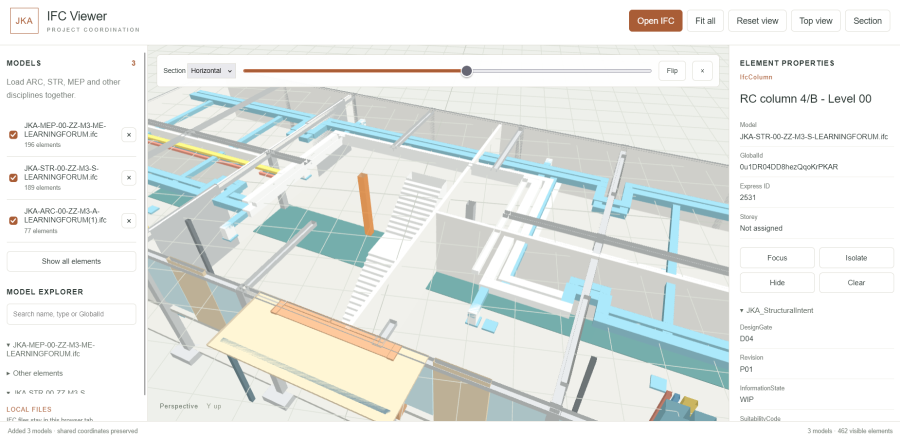
The user need was clear: review several BIM models together, inspect properties, and make section cuts in a lightweight IFC viewer.
I used an approach I’ve applied to larger digital products over the years: define the user need, set the scope, and break an epic into user stories with acceptance criteria.
Agent-assisted development shortened the build stage. That let me check the result against those criteria sooner.
Initial testing covered a roughly 4,500 m² education building with five federated models and a roughly 25,000 m² mixed-use office complex with nine models and more than 8,000 visible elements. Import. Inspect. Cut. The viewer stayed responsive. Initial test users reported that the scope met their needs, with few requests for immediate changes.
Next, I’ll organize testing with people in the intended user roles, using their current projects. The goal is to see whether they can complete the review tasks, what guidance they need, and where the prototype falls short.
What interests me is how much earlier I can reach meaningful user testing. That feedback gives stakeholders a clearer basis for agreeing where to focus next, what to leave out, and whether further development is worthwhile.