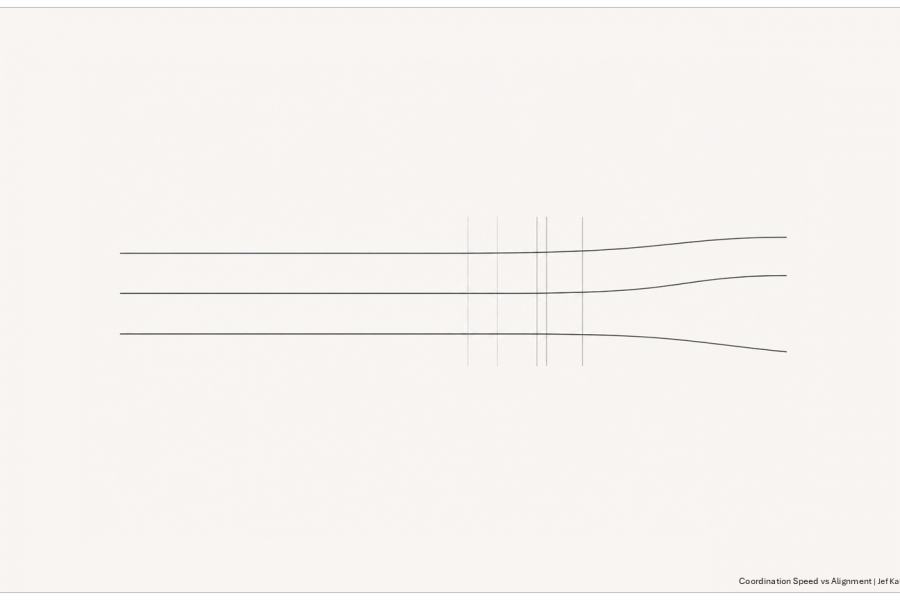
If you’ve followed my recent LinkedIn posts, you’ve probably noticed a recurring theme: as projects accelerate, coordination stability becomes harder to maintain.
I recently explored this through different execution patterns:
- information moving faster than decisions
- coordination windows narrowing under delivery pressure
- visibility increasing while shared understanding weakens
This article brings those observations together into one underlying mechanism:
Projects rarely fail because information is missing. They fail because coordination can no longer remain stable at the speed execution now demands.
I see and hear of the impact of coordination speed across complex projects, where coordination problems are not caused by missing information.
Most of the time, the issue is already visible. A dependency has been identified, or a constraint has already been documented, and the teams are aware that a design adjustment will affect procurement, sequencing, or downstream execution.
The breakdown begins somewhere else, and coordination can no longer move at the same speed as delivery.
In early phases, projects create confidence through structure. Responsibilities are mapped, workflows are agreed, and escalation paths are defined. The system appears organized because coordination is still operating within manageable conditions. Decisions move within smaller groups, dependencies are limited, and alignment is easier to maintain.
Then execution accelerates.
As more teams enter the process, decisions begin moving across disciplines instead of within them. Site conditions evolve while design continues developing. Procurement timelines begin influencing technical decisions. And sequencing changes affect teams that were not part of the original discussion.
The causes the project to no longer operate through isolated coordination moments, but through continuous interdependence.
At that point, speed changes the nature of coordination itself.
On one project, a structural adjustment changed the routing path for technical systems in a congested ceiling area. The update was documented quickly and distributed across teams. Procurement continued based on the previous routing assumptions while site coordination adjusted to the new structural condition.
The project continued and information moved from team to team as planned, but the coordinated decision-making around that information did not.
The project continued as planned and different teams continued operating from different project realities, each based on the latest information available within their own workflow. By the time the discrepancy surfaced, fabrication and sequencing assumptions had already moved forward. And a cost was created by delayed alignment.
This pattern becomes more visible as delivery speed increases. Digital environments accelerate visibility, updates, and distribution. Teams receive more real-time input, more dependencies, and more signals across the project which creates the impression of stronger control.
But visibility does not stabilize coordination.
In practice, faster information flow often compresses the time available for teams to absorb, interpret, validate, and align around decisions. The coordination window narrows while the number of dependencies expands. And then shared understanding gets lost while the project continues moving forward.
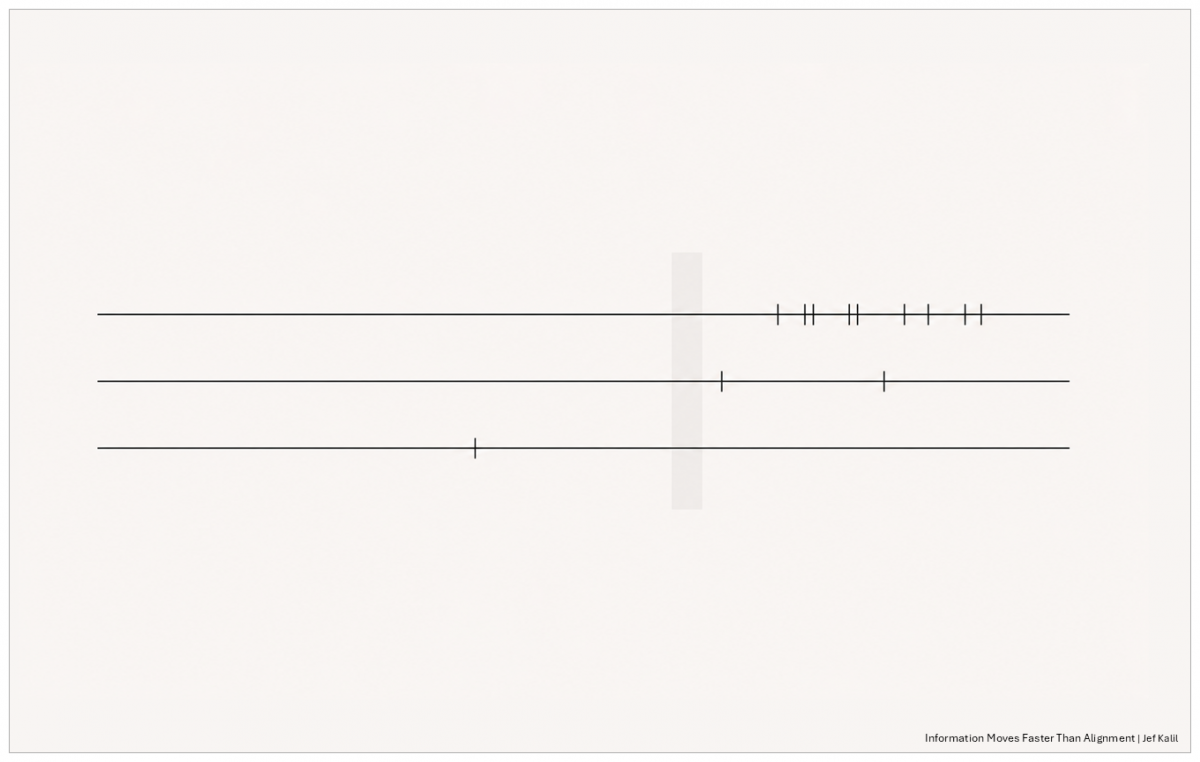
That difference is where execution risk begins accumulating.
The effect is typically not too dramatic at first. Projects still appear stable, reporting remains positive, and milestones continue moving as planned. But most coordination breakdowns begin as small timing gaps between teams operating at slightly different speeds.
For example a planner updates a layout and procurement continues using the earlier assumption, while the site teams sequence work based on what was already approved. Then consultants interpret a revision differently because the control behind the change was never fully carried forward.
By the end each action is individually reasonable, but looking closer, alignment begins fragmenting.
What makes this difficult is that the breakdown does not appear where the decision changes. It appears downstream, when multiple interpretations intersect under delivery pressure. By then, teams are no longer resolving a current coordination issue, but correcting accumulated variances.
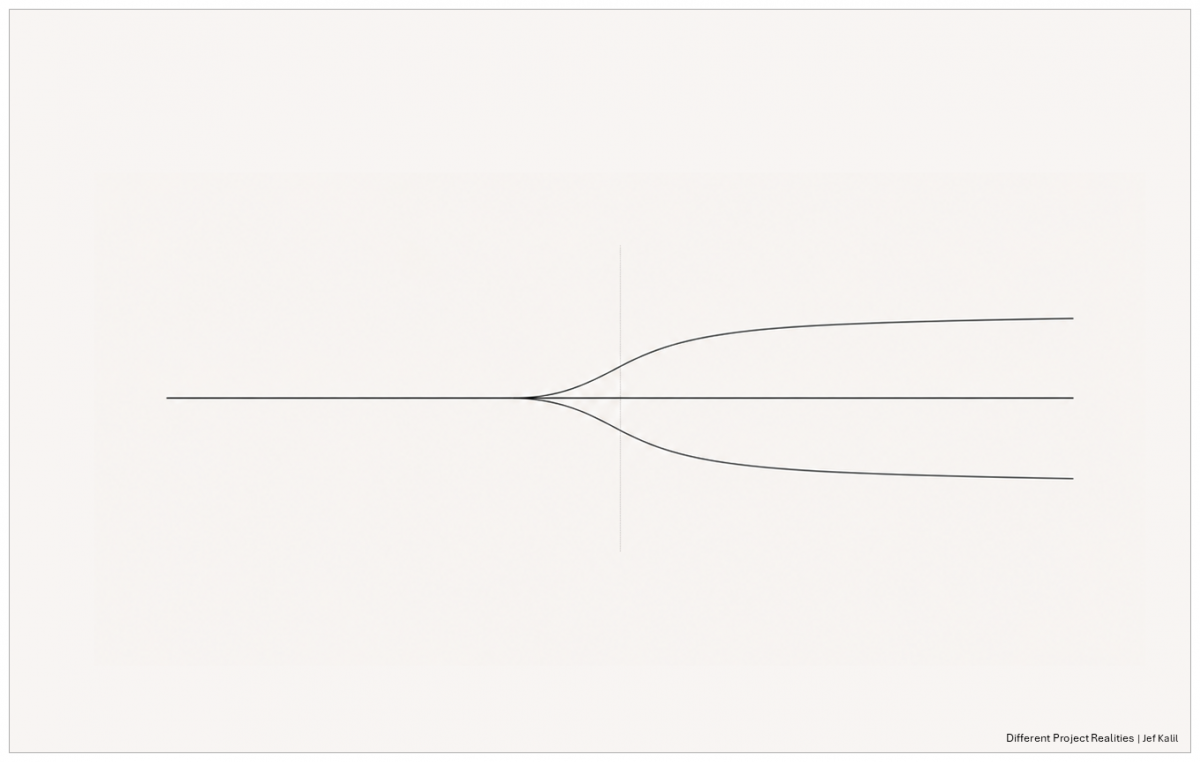
This is why coordination pressure increases long before projects look unstable. The visible structure may still appear intact while the underlying synchronization between teams is already weakening.
At program level, this compounds quickly.
As information velocity increases, projects begin depending more heavily on informal stabilization:
- additional coordination meetings
- manual cross-checking
- reactive escalation
- dependency tracking outside normal workflows
None of this slows delivery.
Over time, the project shifts into a different operating condition. Teams continue progressing, but no longer from the same single understanding of the project state. Decision timing varies between disciplines. Ownership becomes harder to maintain across overlapping dependencies, and visibility increases while alignment decreases.
Delivery continues while predictability becomes blurred.
This is one of the structural risks emerging across digital project delivery environments. Projects are becoming faster and faster at moving information than at maintaining coordinated decision making across teams. And those are not the same capability.
Information flow can scale through systems and processes. Coordination stability depends on something else: the ability of teams to maintain shared understanding, synchronized decision timing, and clear ownership as complexity and speed increase simultaneously.
Without that, projects begin accumulating invisible execution debt.
Not because information is missing, but because coordination can no longer remain stable at the speed delivery now demands.