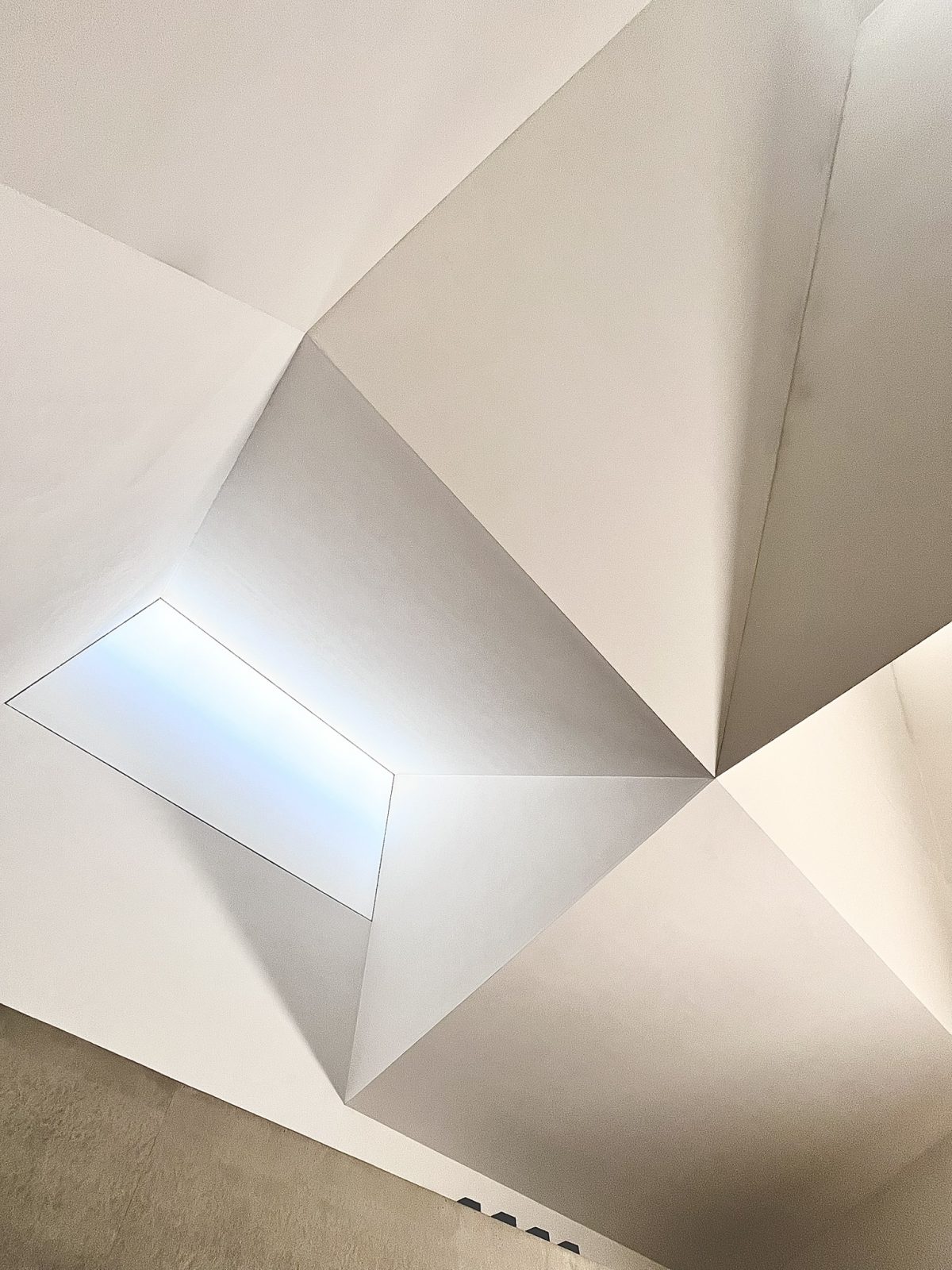
A recently completed public building is difficult to pass without slowing down. Its highly articulated envelope appears precise and unified, with structure, facade and individually designed components resolving into one clear architectural result.
From a distance, it reads as one sculptural object. In delivery terms, it is the result of many highly specialized systems and teams working together.
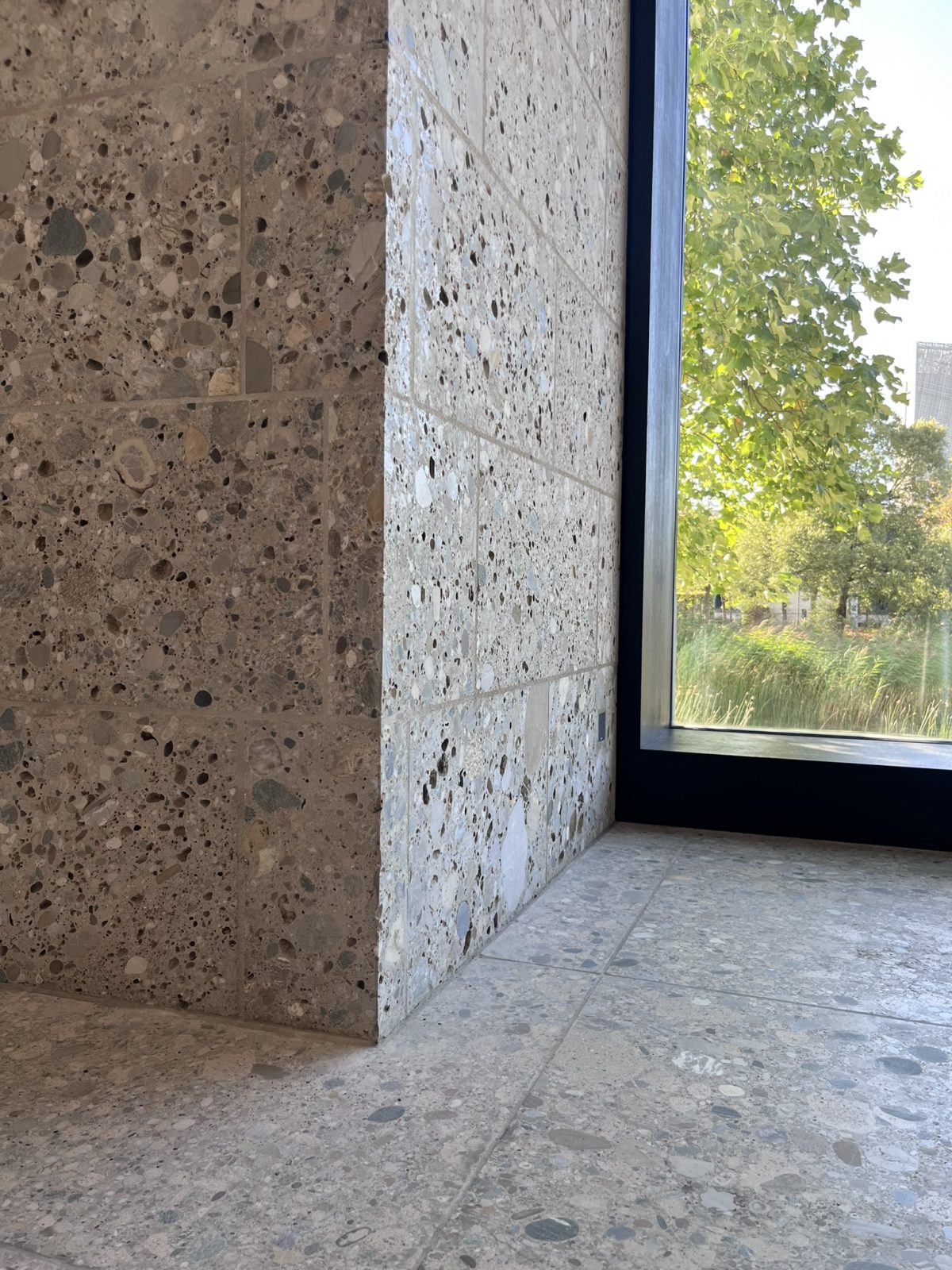
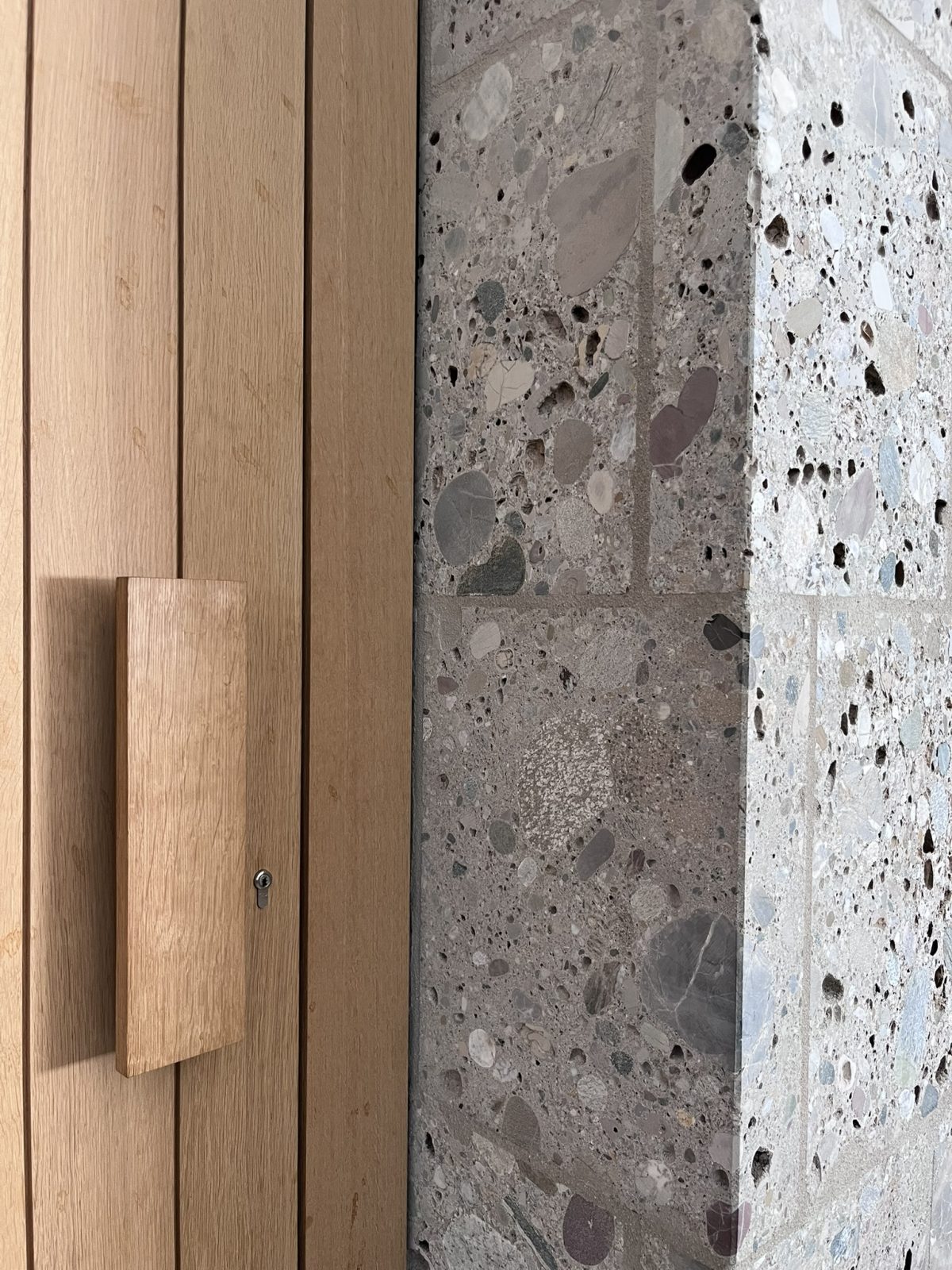
The apparently unified form depends on concrete structure, transfer elements, a complex roof frame, waterproofing, insulation, metal substructure and thousands of specially formed facade elements. These are not standard components that can simply be substituted if something changes. Each system establishes conditions for the next, and each brings specialist engineering, fabrication and installation knowledge into the project.
By the time the final component is installed, decisions made years earlier are still shaping what happens on site.
What interests me is not complexity for complexity’s sake. It is how much continuity is required to carry a design like this through execution. The structure defines and accentuates the supports. Transfer elements establish geometry. The roof build-up determines weatherproofing and insulation. The secondary structure positions the final facade surface. Each interface depends on assumptions established somewhere else in the project.
And then, during delivery, one of those specialist relationships disappeared.
The contractor responsible for part of the facade works became insolvent. The programme had to adjust to an unexpected situation while the rest of the project continued moving forward.
This is where the project becomes particularly interesting from a delivery perspective.
The drawings still existed. The specifications still existed. The latest geometry still existed. But replacing a specialist contractor does not necessarily replace the project knowledge that had accumulated around their work.
Why was a particular interface resolved that way? Which tolerances were critical? What had already been agreed with adjacent disciplines? Which assumptions had made their way into fabrication? What remained unresolved, and who now owned the next decision?
The more specialized and interconnected the work becomes, the more important those questions become.
This is not simply an information problem. It is a continuity problem.
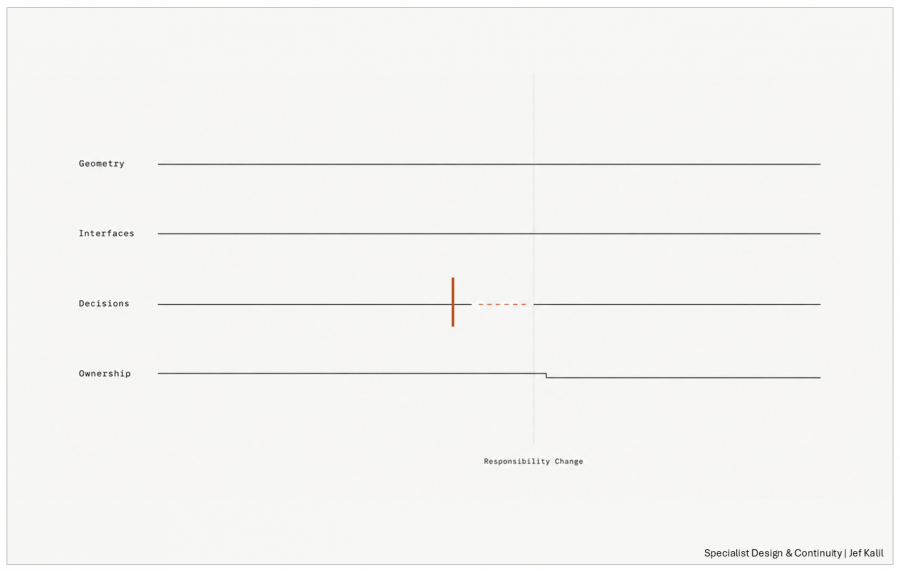
A project can retain thousands of documents and still lose part of its working knowledge when a firm, role or individual leaves the delivery chain. The information remains available, but the connections between decisions, assumptions, interfaces and ownership become harder to reconstruct.
For an owner, that creates a different kind of project risk.
The project needs to absorb change without stopping. Contractors change. People leave. Design develops. Procurement introduces new constraints and site conditions challenge earlier assumptions. Yet the teams responsible for the next activity still need enough confidence in the project state to continue.
Access to the latest information is therefore only part of the answer.
An incoming specialist may have the latest drawings, specifications and model but still need to understand why the current solution exists. They need to know which interfaces are fixed, which remain open, what another package depends on and where a decision is still required before work can safely continue.
That context is often carried informally through the people closest to the work.
As long as those people remain involved, the weakness can remain invisible. Someone knows why the dimension changed. Someone remembers the conversation with the structural team. Someone knows which tolerance cannot move because fabrication has already started.
The project continues because “the people who know” keep it connected.
The risk only becomes visible when one of them disappears.
This is where digital project delivery creates value beyond producing and storing information.
A reliable shared current project state should allow responsibility to change without forcing the project to reconstruct months of context through meetings, emails and individual memory. The next team needs to understand not only what is current, but what that current state means for execution.
Approved geometry should remain connected to the interfaces that depend on it. Open decisions should remain visible with clear ownership. Changes should reach the teams affected by them, and verification requirements should remain understandable even when the person who originally established them is no longer there.
That is a higher standard than information availability.
It is also why I see project organization and digital project delivery as increasingly connected. Digital systems give projects far greater capability to maintain information across time, organizations and project phases. But the value comes from how that capability is structured around execution.
A model can make geometry visible. A shared information environment can make the latest information accessible. Issue structures can make dependencies and ownership visible across teams.
None of those things automatically creates continuity.
Continuity still has to be organized.
For an owner, the distinction matters because the objective is not to create a project where nothing changes. That is unrealistic. The objective is to create a delivery structure capable of absorbing change without losing its coordinated state.
When a specialist contractor changes, the project should not have to rediscover its own reasoning. When a new participant enters, they should not depend entirely on someone explaining months of project history. When an interface changes, the impact should be able to move through the decision and ownership chain before disconnected assumptions reach procurement, fabrication or site.
That is what execution continuity looks like in practice.
As construction becomes more specialized and digitally connected, this capability becomes more important rather than less. More information can move between more organizations at greater speed, but that also means more dependencies need to remain connected as responsibilities change.
The opportunity is not to eliminate specialist knowledge. Projects will continue to depend on people with deep engineering, fabrication and construction expertise.
The opportunity is to make the project less dependent on any one specialist being the only place where critical project context exists.
The finished building gives little indication that any of this happened. Standing outside, you see a precise architectural object. You do not see the contractor change, the decisions that had to survive it or the coordination required to keep different systems connected while delivery continued.
Perhaps that is the point.
Good project organization is often least visible when it works. The visible quality is the achievement, but the continuity that allowed teams to deliver it is part of the execution structure.
About the Author
Jeffrey Albert Kalil writes about digital project delivery, project organization and execution continuity across the AECO industry. His articles explore how decisions, ownership and information move through projects, and why those coordination structures increasingly determine delivery performance.
Continue Reading
This article is part of an ongoing series exploring how digital project delivery, project organization and execution continuity shape project performance.
Related articles
- A Finished Building Hides the Delivery Story
- When Specialist Knowledge Leaves the Project